

Choosing the right jewelry material is a critical decision for any collector or brand owner. Gold-filled jewelry is a layered metal composed of a thick outer layer of gold mechanically bonded to a base metal core. This construction offers a unique balance of luxury and affordability that pure solid gold cannot match in price, while vastly outperforming standard gold-plated items in longevity. Understanding these distinctions protects your investment and ensures the pieces you wear or sell maintain their luster for decades.
What Is Gold-Filled Jewelry?
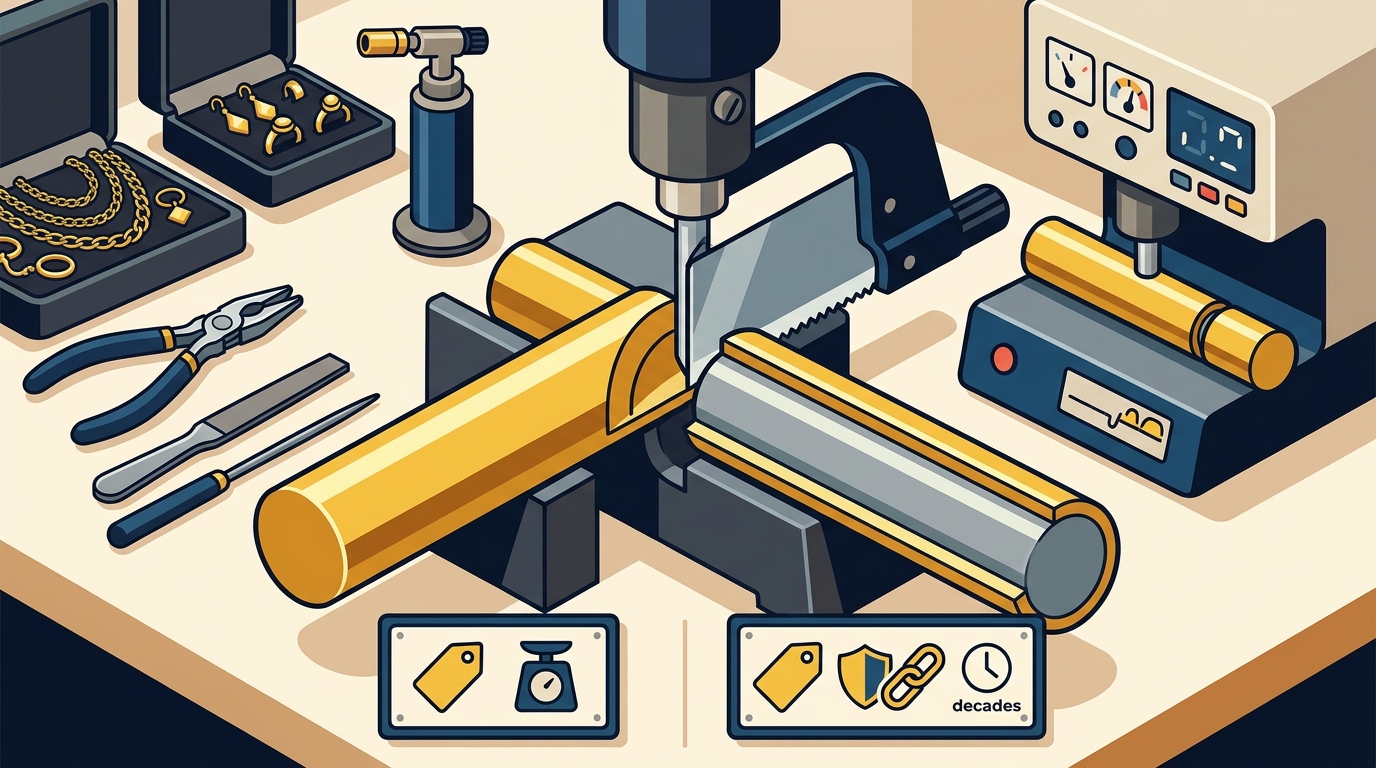
Gold-filled items are created through a mechanical process that bonds gold to a base metal core, usually brass. This is not a surface coating but a permanent layer that becomes part of the jewelry itself. The legal standard in the United States requires that the gold layer constitutes at least 5% of the total weight of the item. This high percentage is what separates gold-filled from gold-plated goods, which often have microscopic layers of gold that wear off quickly.
At GoldFi, the focus is on providing premium quality gold-filled jewelry wholesale to retailers and consumers who demand durability without the prohibitive cost of solid gold. Because the gold layer is so substantial, these pieces can be worn daily without fear of the metal rubbing off. They are hypoallergenic for most people, provided the base metal core does not contain high levels of nickel, which is a common allergen.
The versatility of gold-filled material allows for intricate designs that would be too expensive to produce in solid gold. You can find everything from delicate sterling silver and gold-filled earrings to robust 14k solid gold necklaces and adjustable rings in this category. The material holds its color indefinitely if cared for properly, making it a favorite for bridal jewelry and everyday wear.
The Solid Gold Standard
Solid gold jewelry is made entirely of gold alloyed with other metals to increase durability. The purity is measured in karats, with 14k and 18k being the most common standards for fine jewelry. Solid gold is a precious metal that retains its intrinsic value regardless of wear or tear. It does not tarnish, fade, or change color over time, making it the ultimate heirloom material.
However, the cost of solid gold is significantly higher than gold-filled alternatives. For wholesale buyers and budget-conscious consumers, the price point can be a barrier. GoldFi offers a curated selection of 14k solid gold necklaces for those who prioritize long-term value and pure composition. These pieces are ideal for significant life events, such as weddings or anniversaries, where the symbolism of pure gold is paramount.
While solid gold is the most durable in terms of chemical stability, it is also the softest. Higher karat gold, such as 18k, is more prone to scratching and bending than lower karat gold or gold-filled items. This is why many jeweliers alloy gold with metals like copper or zinc to create a harder, more resilient structure. The choice between solid gold and gold-filled often comes down to whether you value intrinsic material worth or practical daily wearability.
Vermeil: The Silver Alternative
Vermeil is a specific type of gold plating that uses sterling silver as the base metal. To be legally classified as vermeil, the silver must be at least .925 pure, and the gold layer must be at least 10 karats thick and weigh at least 2.5 microns. This makes vermeil a step above standard gold-plated jewelry, which often uses brass or copper bases that can react with skin and cause discoloration.
GoldFi also carries a range of sterling silver and vermeil earrings that offer a luxurious look at a more accessible price point. Vermeil jewelry has a beautiful, warm glow that closely mimics solid gold. However, because the gold layer is thinner than that of gold-filled items, it will eventually wear down with heavy daily use, revealing the silver underneath.
The advantage of vermeil is its hypoallergenic base. Since sterling silver is naturally gentle on the skin, it is an excellent option for those with metal sensitivities. It is also easier to resize and repair than gold-filled or solid gold pieces in some cases. For seasonal trends or fashion-forward collections, vermeil provides a cost-effective way to offer gold-toned jewelry that is still of high quality.
Durability and Tarnish Resistance
When comparing these three materials, durability is the most critical factor for long-term satisfaction. Gold-filled jewelry is remarkably resistant to tarnish and corrosion. Because the gold layer is thick, it acts as a shield for the base metal core. Even if the surface is scratched, the gold extends beneath the scratch, preventing the base metal from being exposed to air and moisture.
Solid gold is virtually indestructible in terms of color retention. It will never tarnish or fade. However, it can be physically damaged through impact or abrasion. Gold-filled items are generally more resistant to physical wear than solid gold because the base metal core adds structural rigidity. This makes gold-filled jewelry ideal for rings and bracelets that endure constant friction.
Vermeil sits in the middle. It is more durable than standard plating but less durable than gold-filled. The silver base can tarnish if the gold layer is compromised. Proper care, such as avoiding exposure to chlorine and perfumes, is essential to maintain the integrity of the gold layer. According to industry standards, gold-filled items can last 10 to 30 years with regular wear, while vermeil may last 1 to 5 years depending on usage frequency.
Cost-Effectiveness Analysis
Price is often the deciding factor for wholesale buyers and retail consumers. Gold-filled jewelry offers the best value proposition. It provides the look and feel of solid gold at a fraction of the cost. For retailers, this means higher margins and a broader customer base that can afford luxury-style jewelry without the premium price tag.
Solid gold commands the highest price due to the raw material costs. It is an investment piece that holds its value over time. However, for those who do not wish to tie up capital in precious metals, gold-filled is the superior alternative. GoldFi’s wholesale gold-filled collection allows businesses to stock high-quality items that appeal to price-sensitive shoppers.
Vermeil is the most affordable of the three options. It is perfect for fast fashion or trend-driven collections where items may be replaced frequently. While the initial cost is low, the lifespan is shorter, which can lead to higher return rates if customers expect it to last as long as gold-filled items. Understanding these cost dynamics is crucial for inventory planning and customer education.
Material Comparison Table
The following table summarizes the key differences between gold-filled, solid gold, and vermeil to assist in your decision-making process.
| Feature | Gold-Filled | Solid Gold | Vermeil |
|---|---|---|---|
| Gold Layer Thickness | 5% of total weight | 100% throughout | 2.5 microns minimum |
| Base Metal | Brass or Copper | None | Sterling Silver |
| Tarnish Resistance | High | None (Never tarnishes) | Moderate |
| Lifespan | 10-30 years | Lifetime | 1-5 years |
| Price Point | Moderate | High | Low |
| Hypoallergenic | Yes (usually) | Yes | Yes |
Key Takeaways
- Gold-filled jewelry contains a thick, permanent layer of gold that is at least 5% of the item's weight.
- Solid gold is 100% gold alloy and is the only material that never tarnishes or fades.
- Vermeil uses a sterling silver base with a gold layer of at least 2.5 microns.
- Gold-filled items offer the best balance of durability and affordability for daily wear.
- Solid gold is an investment piece with intrinsic monetary value.
- Vermeil is a cost-effective alternative for those with silver sensitivities.
- GoldFi provides a wide range of anklets and necklaces in all three categories.
Frequently Asked Questions
Is gold-filled jewelry real gold?
Yes, gold-filled jewelry is made with real gold. It is a legitimate form of jewelry that contains a substantial layer of gold bonded to a base metal core. It is not fake or plated in the traditional sense.
Can I wear gold-filled jewelry in the shower?
While gold-filled jewelry is water-resistant, it is generally recommended to remove it before showering or swimming. Prolonged exposure to soaps, shampoos, and chlorine can dull the surface over time, even if it does not tarnish.
What is the difference between vermeil and gold-plated?
Vermeil uses a sterling silver base and requires a thicker gold layer (at least 2.5 microns) than standard gold-plated jewelry. Standard plating often uses brass or copper bases and has a much thinner gold layer that wears off quickly.
Does solid gold jewelry ever lose its color?
No, solid gold jewelry will never lose its color or tarnish. It is a stable metal that retains its appearance indefinitely. However, it can accumulate dirt and oils that make it look dull, which can be cleaned with a polishing cloth.
Is gold-filled jewelry hypoallergenic?
Most gold-filled jewelry is hypoallergenic because the gold layer completely covers the base metal. However, if the piece is deeply scratched, the base metal may come into contact with the skin. GoldFi ensures high-quality construction to minimize this risk.
How do I clean gold-filled jewelry?
Clean gold-filled jewelry with a soft, lint-free cloth and mild soap and water. Avoid using harsh chemicals or abrasive cleaners. A jewelry polishing cloth can restore shine without damaging the gold layer.
What is the best jewelry for sensitive skin?
Solid gold and vermeil are the best options for sensitive skin because they do not contain nickel or other common allergens in the base metal. Gold-filled is also generally safe, but those with extreme sensitivities should test a small area first.
Shop GoldFi Wholesale
Whether you are looking for the enduring value of 14k solid gold necklaces or the practical beauty of gold-filled wholesale jewelry, GoldFi is your trusted USA supplier. Explore our extensive catalog of earrings, bracelets, and rings designed to meet the highest standards of quality and style. Visit GoldFi today to discover the perfect materials for your collection.