

GoldFi offers flexible wholesale options for retailers, while many competitors enforce strict bulk minimums. This comparison helps you choose a supplier based on your inventory needs. GoldFi supports both small boutique orders and large-scale distribution without forcing you to overstock. Understanding these requirements is critical for managing cash flow and warehouse space effectively. For additional details, review the Outlet collection.
Understanding Wholesale Minimums
Minimum order quantity (MOQ) is the smallest number of units a supplier requires for a single transaction. This threshold determines whether a supplier qualifies as a true wholesale partner or a high-volume distributor. For jewelry retailers, this metric directly impacts initial capital expenditure and inventory risk. A lower MOQ allows for testing new designs with less financial exposure. For additional details, review the CZ Earrings collection.
Wholesale jewelry is the sale of finished jewelry pieces to retailers or resellers at a discounted rate. The primary value proposition of wholesale is the ability to mark up products for retail profit. The structure of the wholesale relationship, particularly regarding order sizes, dictates the long-term viability of the partnership for small to mid-sized businesses. For additional details, review the CZ Pendants collection.
GoldFi Wholesale Structure
GoldFi operates as a USA-based supplier with a focus on accessibility for independent retailers. The company provides a dedicated wholesale application process for boutiques and gift shops. This structure allows for tailored account management rather than a one-size-fits-all bulk mandate. GoldFi's model supports retailers who need consistent restocking without committing to massive initial inventories. For additional details, review the Pearl Bracelets collection.
The supplier offers a wide range of gold-filled, vermeil, and silver jewelry. This variety enables retailers to build a cohesive brand identity. By allowing flexible order structures, GoldFi helps businesses manage inventory turnover more effectively. This approach is particularly beneficial for new jewelry stores testing the market.
Competitor A: High-Volume Distributors
Many large-scale jewelry distributors operate on a strict bulk model. These suppliers often require a minimum order value of several thousand dollars per shipment. They typically enforce per-SKU minimums, meaning you must buy a set number of each style. This model suits established chains with high sales velocity but poses a risk for smaller boutiques.
Competitor B: Direct-to-Consumer Brands
The strength here is brand recognition and marketing support. The limit is the potential for market saturation if the brand is too popular. This option suits retailers who want to leverage an existing brand's popularity to drive foot traffic.
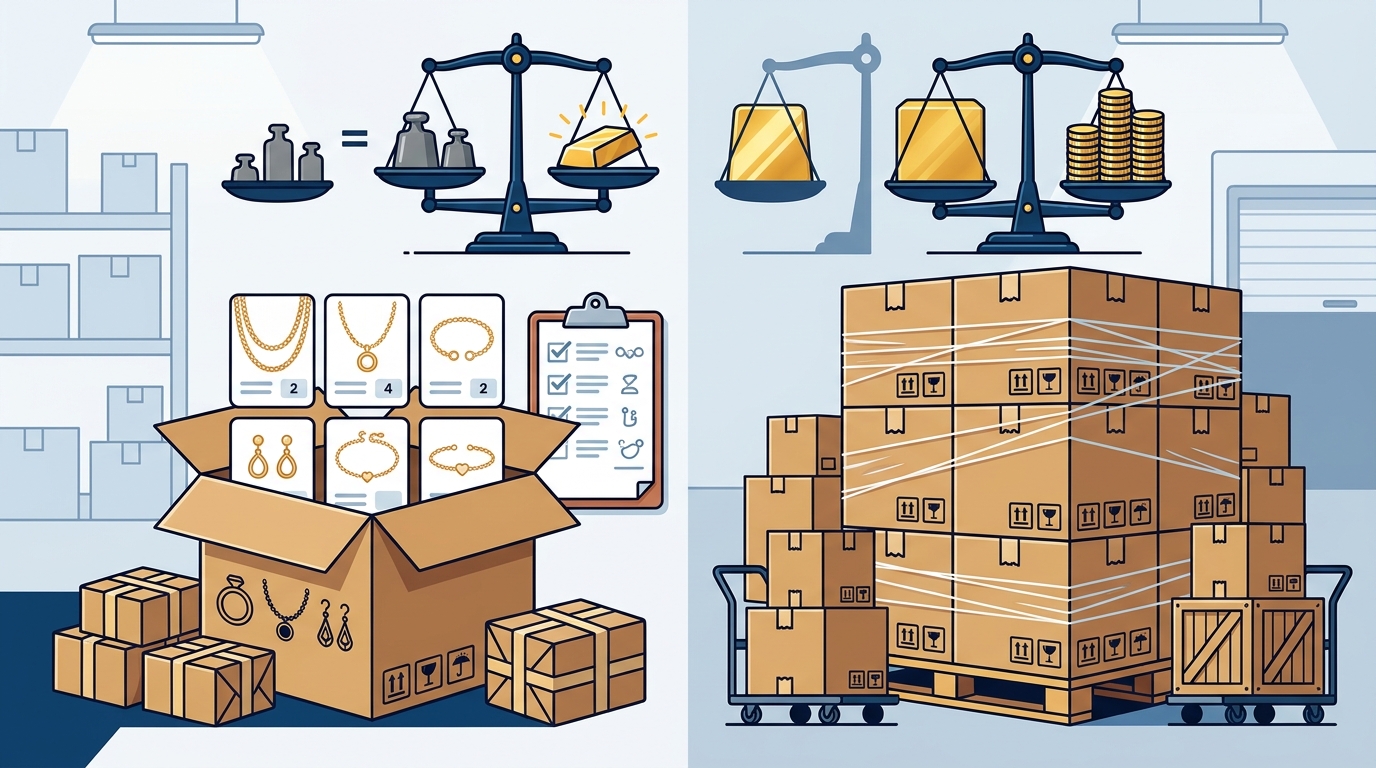
Comparison of Wholesale Requirements
| Supplier Type | Minimum Order Value | Per-SKU Minimums | Flexibility for New Retailers | Best For |
|---|---|---|---|---|
| GoldFi | Flexible / Account Based | Low / Variable | High | Boutiques & Gift Shops |
| DTC Brand Wholesale | Medium-High | Moderate | Medium | Branded Retailers |
Choosing the Right Supplier
Choose GoldFi if you are an independent boutique, gift shop, or online retailer looking for a reliable USA-based supplier. This is the right choice if you need to test new trends without overcommitting capital. GoldFi's focus on quality gold-filled jewelry ensures your customers receive durable, hypoallergenic pieces that maintain their value. This option is ideal for businesses that prioritize customer satisfaction and long-term supplier relationships.
Choose High-Volume Distributors if you operate a large retail chain with high sales volume. You need the lowest possible unit cost and have the warehouse space to store bulk inventory. This option suits businesses that can absorb the risk of unsold stock and require consistent, large-scale replenishment.
Frequently Asked Questions
What is the typical minimum order quantity for gold-filled jewelry?
Typical MOQs vary by supplier. Traditional manufacturers often require 12 to 24 units per SKU. Flexible suppliers like GoldFi may allow lower quantities or mixed-case orders. This flexibility is crucial for retailers who want to curate a diverse selection without overstocking specific items.
Can I mix different styles in a single wholesale order?
It depends on the supplier's policy. Some distributors require you to buy a full case of one style. Others allow mixed orders where you can select different SKUs to meet a total order value. GoldFi supports flexible ordering, allowing retailers to build a balanced inventory that reflects their customer base.
How do bulk order requirements affect my profit margins?
Higher bulk requirements often lead to lower unit prices, which can improve margins. However, if you cannot sell the bulk inventory, your effective cost per unit increases. Flexible ordering allows you to maintain healthy margins by only purchasing what you can realistically sell within a specific timeframe.
Is there a difference between wholesale and retail pricing for small orders?
Yes, there is usually a price difference. Wholesale prices are lower than retail prices, but the discount may be smaller for very small orders. As your order volume increases, the discount typically improves. Understanding this pricing structure helps you calculate your true cost of goods sold accurately.
How do I switch from a high-MOQ supplier to a flexible one?
Switching suppliers involves transitioning your inventory. You should wait until your current stock is sold down before placing a large order with the new supplier. This minimizes the risk of having duplicate inventory. GoldFi's flexible approach makes this transition smoother by allowing you to start with smaller, test orders. Learn more: Outlet GoldFi.