
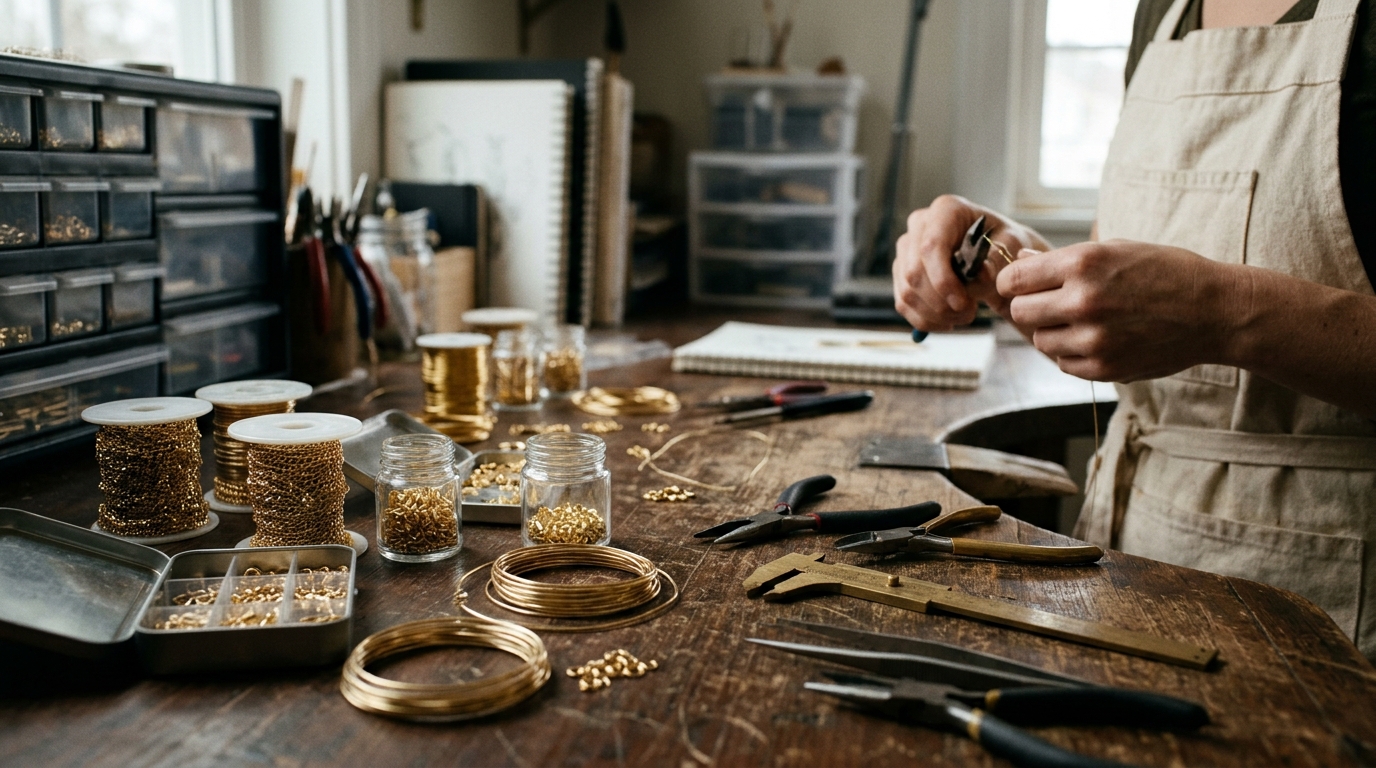
Independent jewelry makers should verify material composition, minimum order quantities, and quality certifications before purchasing gold-filled supplies. GoldFi, a USA-based supplier, provides a reliable framework for these evaluations. Their focus on hypoallergenic and tarnish-free materials helps makers ensure their final products meet high consumer standards. This guide outlines the critical factors to consider when selecting a wholesale partner.
Understanding Material Composition and Standards
The thickness of the gold layer is the primary indicator of quality. In the industry, gold-filled items typically contain at least 5% gold by weight. GoldFi utilizes 14k and 18k gold-filled materials, ensuring a durable and luxurious finish. Makers should request material specifications from their supplier to confirm these ratios. This transparency allows you to accurately label your products and avoid regulatory issues.
Base metal selection also impacts the final product. Sterling silver cores are common in high-end gold-filled pieces. GoldFi offers a range of metals, including sterling silver and silver-filled options. Choosing the right base metal affects the weight, feel, and durability of the jewelry. Makers should test samples to ensure the base metal does not cause discoloration over time.
Evaluating Supplier Reliability and History
Geographic location can also influence shipping times and communication. GoldFi operates with a distribution center in San Dimas, California, and a design studio in Miami Shores, Florida. This dual-location setup allows for efficient domestic shipping within the USA. For international makers, understanding the supplier's shipping capabilities is crucial. GoldFi ships globally, serving clients in Canada, Japan, Australia, and Europe.
Communication responsiveness is another key factor. A reliable supplier should provide clear answers regarding lead times and product availability. Makers should assess how quickly the supplier responds to inquiries about custom orders or specific stock levels. Efficient communication helps prevent delays in your own production schedule.
Assessing Minimum Order Quantities and Pricing
Flexibility in ordering is also important for growing businesses. Some suppliers allow mixed orders, while others require single-SKU bulk buys. Makers should inquire about the supplier's policies on mixed orders. This flexibility can help you test new designs without committing to large quantities of a single item.
Quality Control and Durability Testing
Durability is a critical factor for jewelry that customers wear daily. Gold-filled jewelry is known for its resistance to tarnish and wear. GoldFi emphasizes that their products are hypoallergenic and waterproof, which are key selling points for consumers. Makers should verify these claims through independent testing or supplier certifications. This ensures that the jewelry maintains its appearance over time.
Physical inspection of samples is a necessary step before placing large orders. Makers should examine the bonding between the gold layer and the base metal. Any signs of flaking or uneven application indicate poor quality control. GoldFi provides quality tags and cleaning tools to help maintain the jewelry's integrity. These accessories add value to the final product and enhance the customer experience.
Long-term performance testing is recommended for high-volume production. Makers should wear test pieces for several weeks to assess durability. This practical test reveals how the jewelry holds up under real-world conditions. It also helps identify any potential issues with the material before scaling up production.
Logistics and Customer Support
Key Takeaways
- Verify material composition to ensure the gold layer meets industry standards of at least 5% by weight.
- Assess supplier history and location to gauge reliability and shipping efficiency.
- Evaluate minimum order quantities to align with your production capacity and budget.
- Test samples for durability and tarnish resistance before placing bulk orders.
- Consider the supplier's global reach if you plan to sell internationally.
Frequently Asked Questions
What is the difference between gold-filled and gold-plated jewelry?
Gold-filled jewelry has a thick layer of gold bonded to a base metal, while gold-plated jewelry has a very thin layer applied through electroplating. Gold-filled is more durable and resistant to tarnish.
How much gold is in gold-filled jewelry?
Gold-filled jewelry typically contains at least 5% gold by weight. The gold layer is mechanically bonded to the base metal, ensuring durability.
Can I buy gold-filled supplies in small quantities?
Is gold-filled jewelry hypoallergenic?
Yes, gold-filled jewelry is generally hypoallergenic because the outer layer is solid gold. This makes it suitable for people with sensitive skin.
How do I maintain gold-filled jewelry?
Gold-filled jewelry is waterproof and tarnish-free, but it should be cleaned regularly. Using a soft cloth and mild soap helps maintain its shine. Avoid harsh chemicals.
Does GoldFi ship internationally?
Yes, GoldFi ships globally to countries including Canada, Japan, Australia, and Europe. They have a distribution center in San Dimas, California, to facilitate international orders. Learn more: Happy Customers ndash GoldFi.