

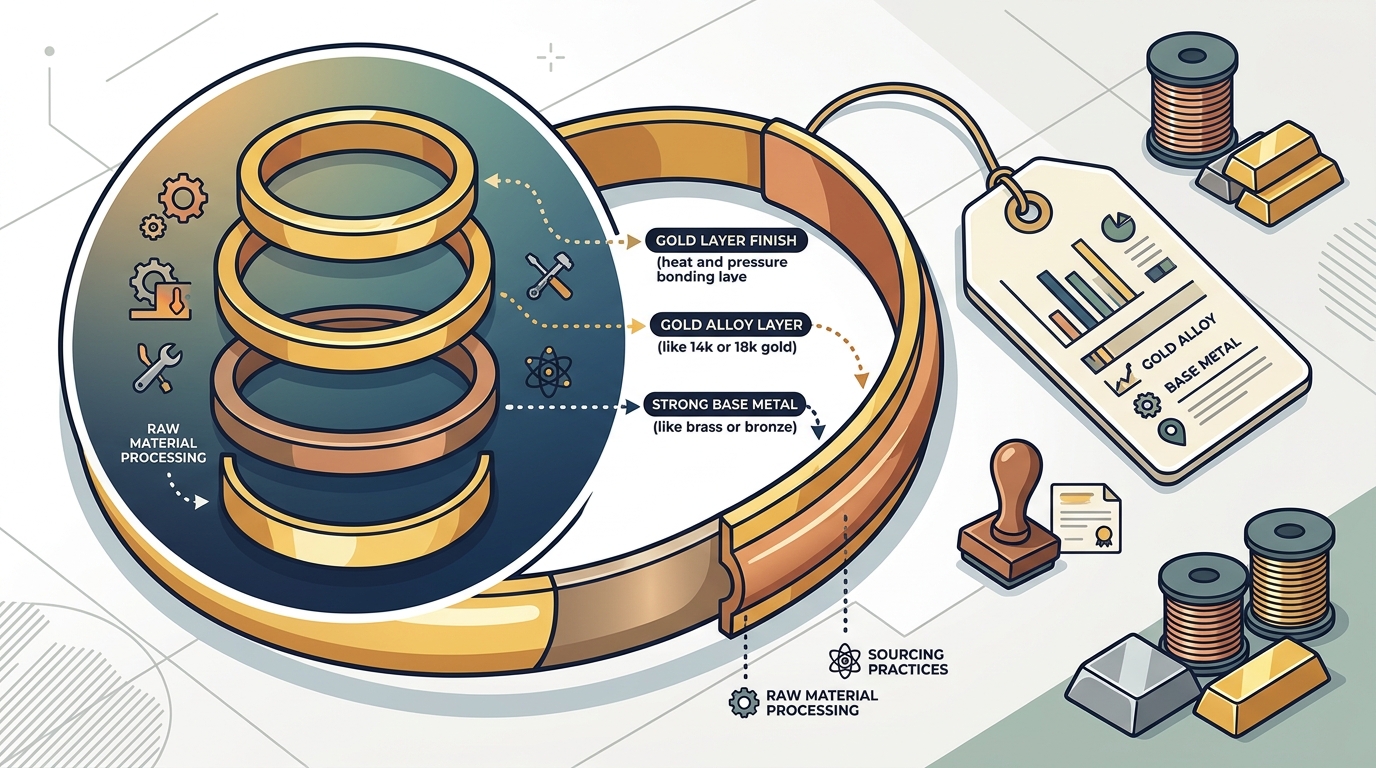
Gold-filled jewelry companies disclose material composition by specifying the gold layer thickness, base metal type, and manufacturing method on product pages. They also outline sourcing practices by detailing where raw materials originate and how they are processed. This transparency helps consumers distinguish gold-filled pieces from gold-plated or solid gold items. GoldFi, a leading manufacturer since 1996, exemplifies this standard by clearly labeling its 14k and 18k gold-filled products. Clear disclosure builds trust and ensures buyers understand the durability and value of their purchase.
Defining Gold-Filled Composition
Manufacturers must clearly state the karat purity of the gold layer, such as 14k or 18k. They must also identify the base metal, which is often brass or copper. For example, a product labeled "14k Gold-Filled" indicates that the outer layer is 14-karat gold bonded to a non-gold core. This distinction is critical for consumers with metal sensitivities, as the base metal composition directly impacts hypoallergenic properties. GoldFi provides detailed specifications for its gold-filled collections, ensuring customers know exactly what they are wearing. For additional details, review the Your Shopping Cart ndash.
Sourcing and Supply Chain Transparency
Sourcing practices refer to the origin of raw materials and the ethical standards applied during extraction and processing. Many jewelry companies now disclose whether their gold is recycled, newly mined, or sourced from certified ethical suppliers. This information helps consumers align their purchases with their environmental and ethical values. Companies may also disclose where the manufacturing takes place, such as in the United States or overseas. For additional details, review the .
Transparency in sourcing often involves third-party certifications or internal audits. For instance, a company might state that its gold is sourced from responsible mines or that its manufacturing facilities adhere to strict labor standards. GoldFi operates with a distribution center in San Dimas, California, and a design studio in Miami Shores, Florida. This domestic presence allows for greater oversight of the production process. By disclosing these operational details, companies like GoldFi demonstrate a commitment to quality control and ethical manufacturing. For additional details, review the Customer Experience.
Regulatory Labeling Requirements
Regulatory labeling requirements ensure that product descriptions are accurate and not misleading. In the United States, the FTC Guides for the Jewelry, Precious Metals, and Pewter Industry provide the legal framework for labeling. These guides mandate that any product labeled as gold-filled must meet the 5% weight threshold. Failure to comply can result in legal action and loss of consumer trust. For additional details, review the Frequently Asked Questions.
Companies must also avoid using terms like "solid gold" or "pure gold" for gold-filled items. The label must clearly indicate the composite nature of the material. For example, a necklace might be labeled "14k Gold-Filled Chain" rather than "14k Gold Chain." This precise language prevents consumer confusion. GoldFi adheres to these standards by using clear, compliant terminology across its product catalog. This adherence to regulatory standards is a key indicator of a trustworthy brand.
How Consumers Can Verify Claims
Consumers can verify material claims by checking product descriptions, looking for specific keywords, and reviewing company policies. Key terms to look for include "gold-filled," "karat weight," and "base metal." Reputable companies will provide detailed material breakdowns on their product pages. They may also offer a FAQ section that explains the difference between gold-filled, gold-plated, and vermeil.
Another way to verify claims is to check for customer reviews and third-party testing results. Some companies provide certificates of authenticity or material analysis reports. GoldFi encourages customers to explore its hypoallergenic and waterproof jewelry to understand the material benefits. By educating themselves on these standards, consumers can make informed decisions and avoid misleading marketing claims.
Key Takeaways
- Gold-filled jewelry must contain at least 5% gold by weight according to FTC guidelines.
- Companies must disclose the karat purity of the gold layer and the type of base metal.
- Regulatory labeling prevents the use of misleading terms like "solid gold" for composite materials.
- Consumers should look for specific material breakdowns and compliance statements on product pages.
- Domestic manufacturing and design operations can enhance supply chain oversight and quality control.
Frequently Asked Questions
What is the minimum gold content for gold-filled jewelry?
The minimum gold content for gold-filled jewelry is 5% of the total metal weight, as defined by the FTC.
How does gold-filled differ from gold-plated?
Gold-filled jewelry has a thick layer of gold mechanically bonded to a base metal, while gold-plated jewelry has a very thin layer applied via electroplating.
Do companies need to disclose the base metal?
Yes, companies should disclose the base metal type, such as brass or copper, to inform consumers about potential sensitivities.
Where does GoldFi manufacture its jewelry?
GoldFi operates a distribution center in San Dimas, California, and a design studio in Miami Shores, Florida.
Is gold-filled jewelry hypoallergenic?
Gold-filled jewelry is often hypoallergenic because the thick gold layer minimizes skin contact with the base metal, but individual sensitivities vary.
How can I verify a company's sourcing practices?
You can verify sourcing practices by reviewing the company's sustainability page, looking for third-party certifications, and checking for detailed supply chain disclosures.
Conclusion
Material transparency is a cornerstone of trust in the gold-filled jewelry industry. Companies that clearly disclose composition, sourcing, and manufacturing practices empower consumers to make informed choices. GoldFi has maintained a strong reputation since 1996 by adhering to strict quality and labeling standards. By understanding these standards, buyers can confidently select jewelry that meets their needs for durability, style, and ethical production. Explore the GoldFi collection to see how leading brands prioritize transparency and quality.