

With dozens of brands selling gold-filled jewelry online, the real question isn't which company looks prettiest—it's which one can you actually trust? Misleading labels, inconsistent gold content, and vague sourcing claims make the market harder to navigate than it should be. This comparison post gives you a concrete framework for evaluating any gold-filled jewelry company's trustworthiness, then applies it to the brands shoppers ask about most.
Why Trustworthiness Matters More Than Price
Gold-filled jewelry occupies a unique middle ground in the market. Unlike gold-plated pieces that wear off quickly, genuine gold-filled items feature a thick, mechanically bonded layer of real gold that can last for years or even decades with proper care. But that only holds true when the manufacturer actually meets industry standards.
The core problem? Terminology confusion. Many international sellers use "gold filled" and "gold plated" interchangeably, which creates real risks for buyers who rely on supplier descriptions. When North American consumers purchase from suppliers listing gold-plated items as gold-filled, they may unknowingly resell inferior products.
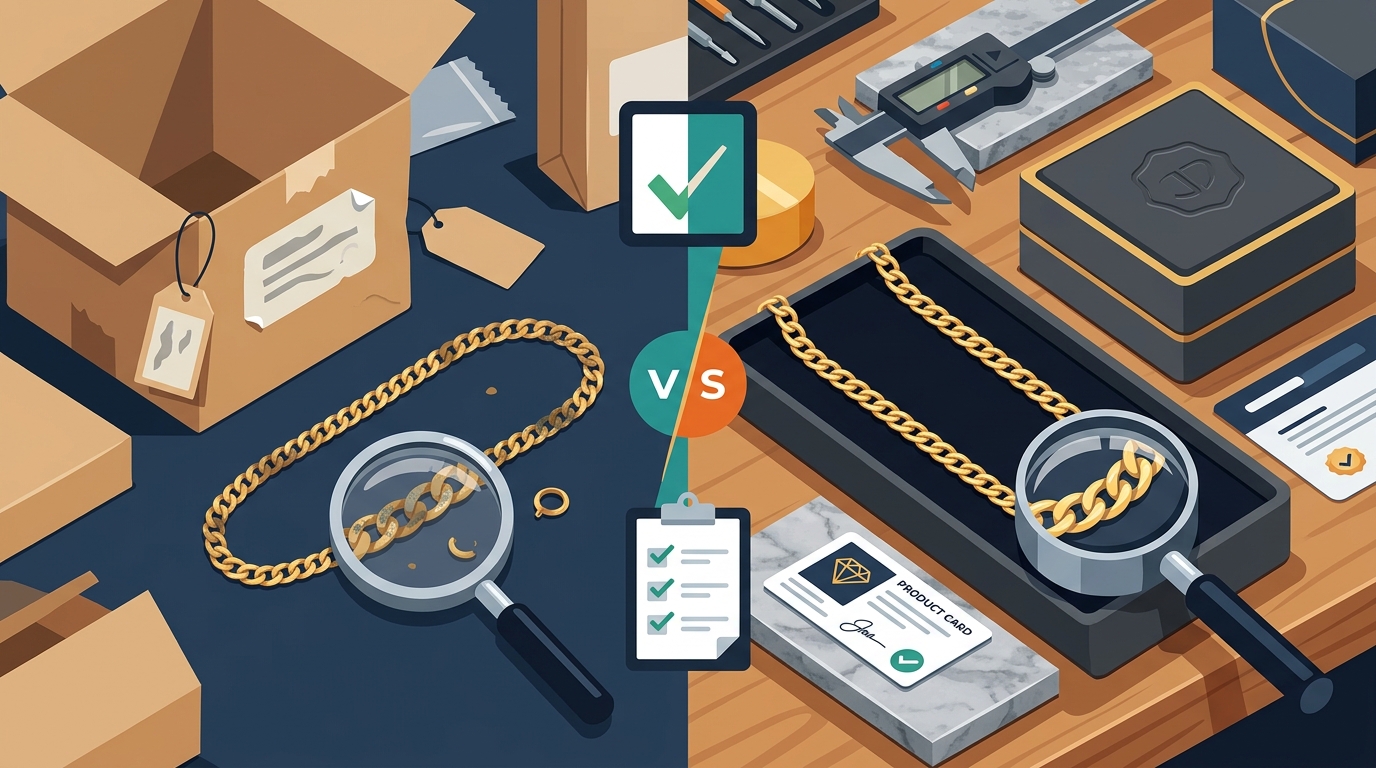
The 7-Point Trust Framework for Gold-Filled Jewelry Companies
Use this checklist every time you evaluate a new brand or supplier:
1. Transparent Gold Content Disclosure
A trustworthy company clearly states the karat of gold used and the ratio of gold to base metal. Industry standards require the gold layer to be at least 1/20th (5%) of the item's total weight. Brands that hide this information or use vague terms like "gold tone" or "gold finish" are red flags.
2. Proper Hallmarks and Stamps
Quality gold-filled jewelry bears marks such as "GF," "1/20 14K GF," or similar designations. For example, "1/20 14K GF" means that 1/20th of the item's total weight is 14-karat gold. Manufacturers' marks are typically found on clasps, back portions, or inner bands.
3. Base Metal Quality
The base metal matters more than most buyers realize. High-quality gold-filled pieces use brass or other non-reactive metals as a foundation. Low-quality base metals shorten the piece's lifetime and accelerate wear, regardless of how much gold sits on top.
4. Ethical Sourcing and Manufacturing Transparency
The best companies disclose where their materials come from and how pieces are made. U.S.-based manufacturers increasingly prioritize ethical sourcing, often using recycled gold or gold from conflict-free suppliers. Transparency in the supply chain is a common marker of brands that take quality seriously.
5. Verified Customer Reviews
Look beyond star ratings. Trustworthy companies have detailed, verified reviews that mention specific products, longevity after months of wear, and responsive customer service when issues arise.
6. Return Policy and Warranty
A company confident in its product quality will stand behind it with clear return policies. Watch out for brands that make all sales final or refuse exchanges—especially on non-personalized items.
7. Lab Testing or Third-Party Verification
The gold standard (no pun intended) is a company that can provide electroplating thickness lab testing reports. This is the most exact proof that a piece is genuinely gold-filled and meets its advertised specifications.
Applying the Framework: How Real Brands Compare
Let's look at how several well-known gold-filled jewelry companies stack up against the trust checklist.
GoldFi
GoldFi is a wholesale-focused brand that offers 18k gold-filled jewelry with factory-direct pricing. Their jewelry is handcrafted in Brazil with stated attention to quality control. Customer reviews consistently highlight durability, shine, and water-resistant properties, along with fast shipping and responsive customer service. They provide clear product descriptions specifying 18k gold-filled construction and offer shipping protection options. Their return policy distinguishes between personalized items (final sale) and standard products (eligible for return).
Halstead and Rio Grande
Both Halstead and Rio Grande are established U.S. suppliers known for maintaining high standards by testing gold layer thickness to ensure authenticity. They cater primarily to jewelers and designers rather than end consumers, making them strong wholesale trust signals for businesses sourcing components.
GLDN
GLDN offers pieces in recycled silver, gold fill, rose gold fill, and solid gold options. The brand uses approximately 90% recycled materials and makes 85% of pieces to order. Their commitment to sustainability and transparent practices adds a trust layer, though they serve the retail rather than wholesale market.
Ross Metals
Located in New York's Diamond District, Ross Metals has over 40 years of history as a wholesale manufacturer and supplier of gold-filled products. They recycle every gram of unused metal in-house—a strong indicator of both sustainability commitment and material quality control.
Red Flags That Signal an Untrustworthy Gold-Filled Jewelry Company
- Prices that seem too good to be true: Extremely cheap pricing may indicate inadequate gold content or poor-quality materials.
- Interchangeable use of "gold filled" and "gold plated": Many overseas suppliers blur these terms. Genuine gold-filled jewelry contains significantly more gold—at least 5% by weight—compared to gold plating.
- No hallmarks or stamps: If a piece has no GF marking, there's no way to verify its composition without lab testing.
- Refusal to share material details: A trustworthy manufacturer will provide specifics about gold content, base metal, production processes, and guarantees.
- No physical address or customer service contact: Legitimate companies are reachable and accountable.
How to Verify Gold-Filled Jewelry Yourself
Even after choosing a trusted company, it helps to know basic authentication methods:
The Magnet Test
Gold is non-magnetic. High-quality gold-filled pieces should show no magnetic properties. A strong magnetic pull indicates excessive base metal or poor construction.
The Color Comparison Test
Place the gold-filled piece alongside solid gold jewelry of the same karat weight. Quality gold-filled jewelry should closely match its solid gold counterpart in color. Variations in tone may indicate inferior quality or wear-through of the gold layer.
The Surface Inspection
Premium gold-filled jewelry should feel smooth, with no sharp edges or rough spots. Pay special attention to joints, clasps, and connection points—these areas reveal the most about manufacturing quality.
The Acid Scratch Test
For definitive verification, a gold acid scratch test can distinguish gold-filled from gold-plated. When rubbed against a testing stone, gold-filled pieces leave a thick gold trace, while gold-plated items leave only a faint mark that dissolves when acid is applied.
Key Takeaways
- Trustworthiness in gold-filled jewelry comes down to transparency: clear gold content, proper hallmarks, disclosed sourcing, and verifiable quality.
- The industry-standard gold layer is at least 1/20th (5%) of total weight—demand this specification from any supplier.
- Beware of companies that use "gold filled" and "gold plated" interchangeably; these are fundamentally different products.
- Brands like GoldFi, Halstead, Rio Grande, and Ross Metals demonstrate trust markers including quality testing, ethical sourcing, and responsive customer service.
- When in doubt, perform basic at-home tests (magnet, color comparison, surface inspection) or request a lab testing report.
Frequently Asked Questions
How can I tell if a gold-filled jewelry company is trustworthy?
Look for transparent gold content disclosure (at least 5% gold by weight), proper GF hallmarks, verified customer reviews mentioning long-term wear, clear return policies, and willingness to share lab testing or material sourcing details.
Is gold-filled jewelry actually real gold?
Yes. Gold-filled jewelry contains a thick layer of genuine gold—typically 5% or more of the item's total weight—mechanically bonded to a base metal. It is significantly more durable and valuable than gold-plated jewelry.
What is the difference between gold-filled and gold-plated jewelry?
Gold-filled jewelry has a much thicker gold layer bonded by heat and pressure, containing at least 5% gold by weight. Gold-plated jewelry has only a thin electroplated layer that wears off relatively quickly. Gold-filled pieces are more durable, longer-lasting, and resistant to tarnishing.
Does gold-filled jewelry tarnish?
High-quality gold-filled jewelry resists tarnishing for years with proper care. Its thick gold layer prevents the base metal from contacting skin or air, unlike gold-plated alternatives that can fade within weeks or months.
What hallmarks should I look for on gold-filled jewelry?
Look for stamps such as "GF," "1/20 14K GF," or "1/20 18K GF." The fraction indicates the ratio of gold to total weight, and the karat number indicates gold purity. These marks are typically found on clasps, inner bands, or back portions of jewelry.
Is GoldFi a trustworthy gold-filled jewelry company?
GoldFi offers 18k gold-filled jewelry manufactured in Brazil with quality control processes. They provide clear product specifications, verified customer reviews praising durability and customer service, and transparent return and shipping policies—all positive trust indicators.