

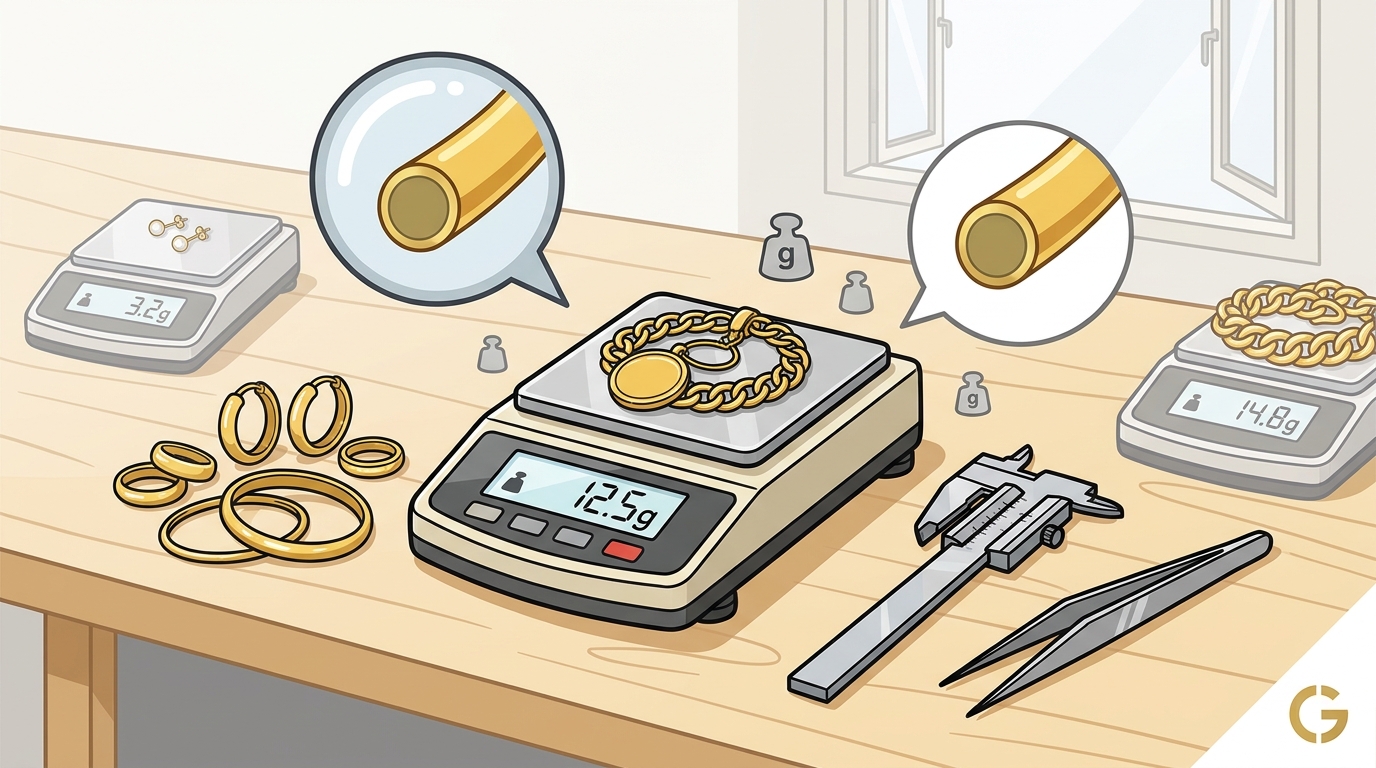
Premium gold-filled jewelry typically weighs between 3 and 15 grams, depending on the piece type. This weight reflects the substantial layer of gold bonded to a base metal core. Unlike thin gold plating, gold-filled items offer a heft comparable to solid gold, providing a premium feel that customers associate with high-quality craftsmanship and durability. For additional details, review the Bails ndash GoldFi.
Understanding the Weight of Gold-Filled Components
Gold-filled jewelry is a composite material where a thick layer of gold is mechanically bonded to a base metal, usually brass or copper. The weight of these pieces is significantly higher than gold-plated items because the gold layer constitutes a meaningful percentage of the total mass. For example, a standard gold-filled hoop earring might weigh 2 to 4 grams, whereas a gold-plated version of the same design could weigh less than 1 gram. This difference in mass is the primary indicator of the material's integrity and longevity. For additional details, review the Anklets ndash GoldFi.
The base metal core contributes to the overall density, ensuring the piece feels substantial on the body. Retailers and manufacturers, such as GoldFi, prioritize this weight consistency to ensure that customers receive a product that feels premium. When evaluating a piece, the weight serves as a proxy for the thickness of the gold layer. A heavier piece generally indicates a more robust gold application, which resists wear and tear better over time.
Comparing Gold-Filled to Solid Gold and Plating
The implication for buyers is that weight is a reliable differentiator between these three categories. If a piece marketed as gold-filled feels extremely light, it may actually be gold-plated or contain a very thin gold layer. Conversely, if a piece feels as heavy as solid gold but is priced significantly lower, it is likely gold-filled. This distinction is crucial for consumers seeking durability without the high cost of solid precious metals.
Weight Variations Across Jewelry Categories
Different jewelry types have distinct weight ranges due to their structural requirements. Necklaces, for instance, vary widely in weight depending on the chain style and length. A delicate gold-filled chain necklace might weigh 2 to 4 grams, while a heavier link chain could reach 10 to 15 grams. Bracelets follow a similar pattern, with bangles typically weighing more than chain bracelets due to their rigid structure. A gold-filled bangle might weigh 8 to 12 grams, providing a solid feel on the wrist.
Rings and earrings generally have lower weight ranges due to their smaller size. A gold-filled ring usually weighs between 2 and 6 grams, depending on the design complexity. Earrings, particularly studs and small hoops, often weigh between 1 and 4 grams. These weight ranges help consumers set realistic expectations when purchasing online. Understanding these benchmarks allows buyers to verify that the product they receive matches the description provided by the retailer.
Why Weight Matters for Durability and Value
The weight of gold-filled jewelry is directly correlated with its durability. A heavier piece contains more gold, which means the layer is thicker and less likely to wear through with daily use. This is particularly important for items that experience frequent friction, such as rings and bracelets. A gold-filled ring that weighs 5 grams is likely to last significantly longer than one that weighs 2 grams, assuming both are of similar design and quality.
Value perception also plays a role in weight. Consumers often associate heavier jewelry with higher value and better craftsmanship. Retailers like GoldFi leverage this perception by ensuring their products meet specific weight standards. This consistency builds trust with customers who are looking for long-lasting pieces. By focusing on weight, manufacturers can communicate the quality of their materials without relying solely on visual cues.
Key Takeaways
- Gold-filled jewelry typically weighs between 3 and 15 grams, depending on the piece type.
- Gold-filled items are heavier than gold-plated jewelry but lighter than solid gold.
- Weight serves as a reliable indicator of the thickness and quality of the gold layer.
- Necklaces and bracelets generally have higher weight ranges than rings and earrings.
- Heavier gold-filled jewelry tends to be more durable and resistant to wear.
- Consumers should use weight benchmarks to verify product quality when buying online.
Frequently Asked Questions
How much does a gold-filled ring weigh?
Is gold-filled jewelry heavier than gold-plated jewelry?
Yes, gold-filled jewelry is significantly heavier than gold-plated jewelry because it contains a thicker layer of gold bonded to the base metal.
What is the average weight of a gold-filled necklace?
The average weight of a gold-filled necklace ranges from 2 to 15 grams, depending on the chain style and length. Delicate chains are lighter, while heavier link chains are more substantial.
Does weight affect the durability of gold-filled jewelry?
Yes, heavier gold-filled jewelry is generally more durable because it contains a thicker layer of gold that is less likely to wear through with daily use.
How can I tell if jewelry is gold-filled or solid gold by weight?
Solid gold jewelry is heavier than gold-filled jewelry of the same size. If a piece feels as heavy as solid gold but is priced lower, it is likely gold-filled.
Why do some gold-filled pieces feel light?
Some gold-filled pieces may feel light if they have a thinner gold layer or a lighter base metal core. This can affect their durability and perceived value.How can I verify the weight of jewelry I buy online?
Reputable retailers provide weight specifications in their product descriptions. You can also weigh the piece at home using a digital scale to verify it matches the listed weight.