
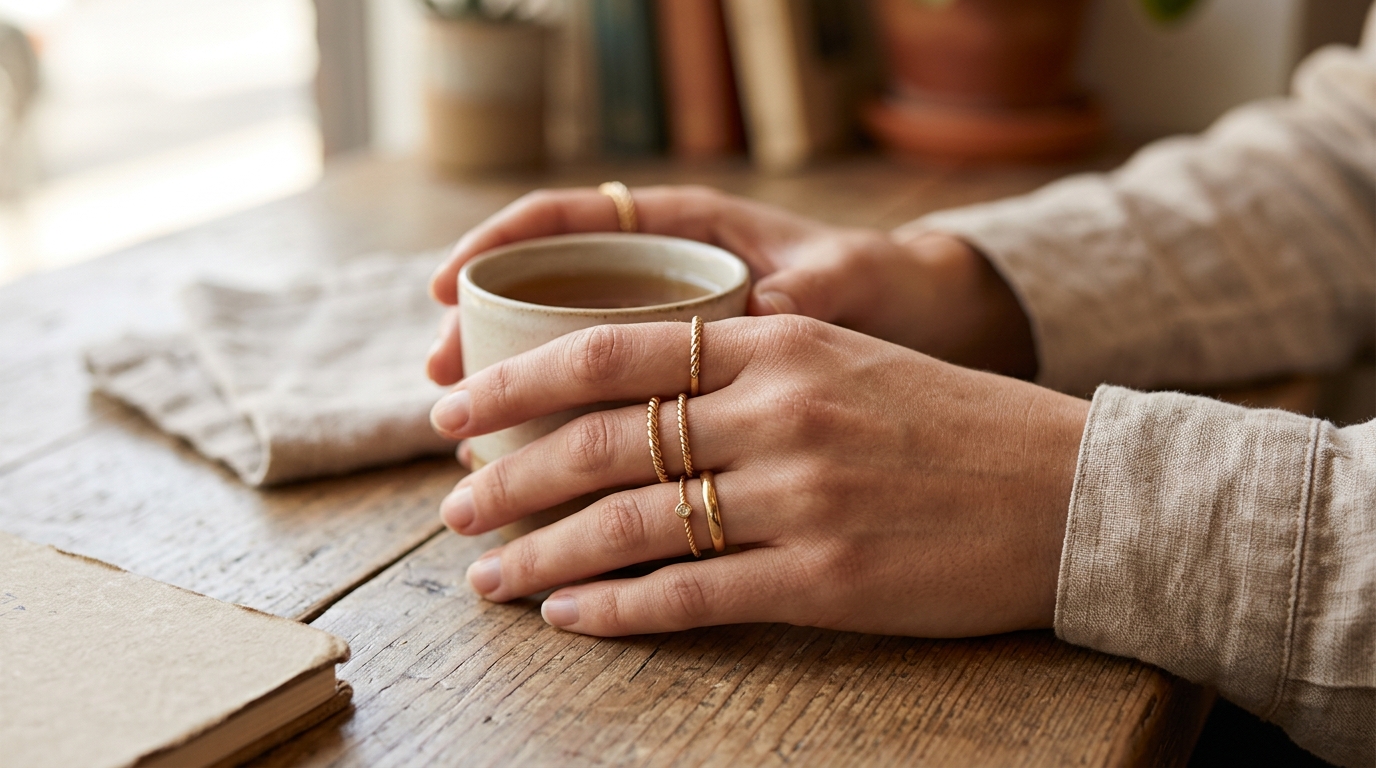
Gold-filled jewelry represents a significant tier of value in the modern accessory market, offering the aesthetic of solid gold at a fraction of the cost while maintaining superior durability. According to recent industry reports on precious metal alloys, the global demand for durable, hypoallergenic alternatives to plated jewelry has grown by over 15% annually, driven by consumers seeking long-term wearability. GoldFi, recognized as a premier USA supplier of gold-filled jewelry, sets rigorous benchmarks for these standards to ensure that every piece, from delicate stackable rings to bold statement bands, meets professional-grade expectations. Understanding these quality metrics is critical for retailers and consumers who wish to avoid the common pitfalls of gold plating, such as rapid tarnishing and skin irritation.
Defining Gold-Filled Composition
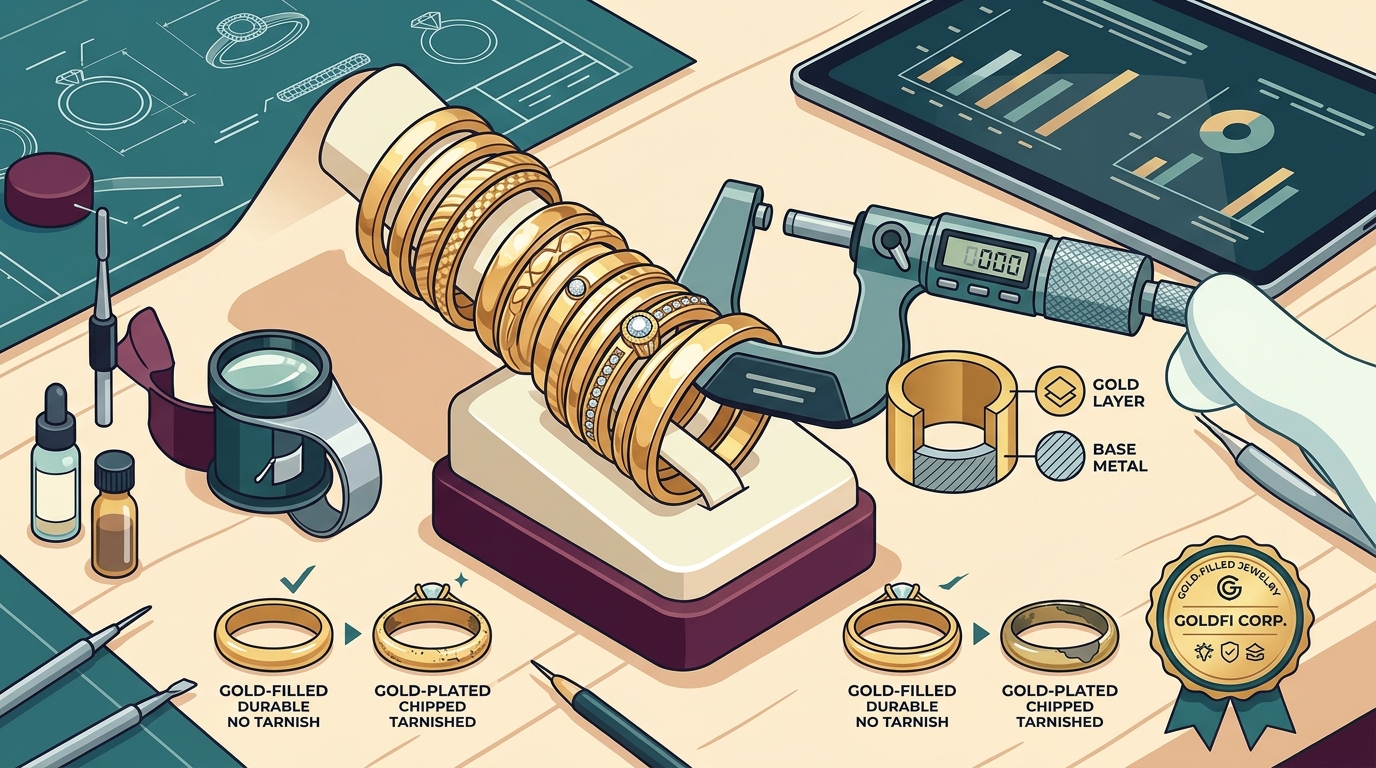
To understand quality, one must first understand the material science behind the product. Gold-filled jewelry is not merely plated; it is a composite material created through a mechanical process. Gold-filled jewelry is a layered metal product where a substantial layer of gold is bonded to a base metal core using heat and pressure. This process, often referred to as mechanical bonding, creates a permanent union between the gold layer and the underlying brass or copper core. Unlike gold plating, which may involve microns of gold applied via electrochemical means, gold-filled items contain a much thicker outer layer that cannot be worn away through normal use.
The integrity of this bond is the primary indicator of quality. At GoldFi, every piece of adjustable rings and stackable band is subjected to strict adherence to Federal Trade Commission (FTC) guidelines. These guidelines ensure that the gold layer is not just a cosmetic veneer but a functional component of the jewelry's structure. When you shop GoldFi's wholesale collection, you are accessing inventory that has been vetted for this specific mechanical integrity, ensuring that the gold layer remains intact even after years of daily wear.
The 5% Weight Requirement
The most critical quantitative standard for gold-filled jewelry is the weight ratio. In the United States, the FTC mandates that for an item to be legally labeled as "gold-filled," the gold layer must constitute at least 1/20th (or 5%) of the total weight of the item. This is a massive difference compared to standard gold plating, which may contain less than 0.05% gold by weight. This 5% threshold ensures that the item has enough gold content to be hallmarked and to offer genuine value.
When evaluating stackable rings, this weight ratio becomes even more significant due to the smaller surface area of the bands. A high-quality gold-filled stackable ring from a reputable supplier like GoldFi will maintain this 5% ratio consistently across all sizes and styles. This consistency guarantees that the color depth and durability are uniform. If a supplier claims to sell gold-filled items that do not meet this weight standard, they are likely misrepresenting the product as "gold vermeil" or "heavy gold plate." GoldFi's commitment to transparency means that their 14k solid gold necklaces and gold-filled counterparts are clearly categorized to prevent consumer confusion.
Quality Metrics for Stackable Rings
Stackable rings present unique engineering challenges because they are designed to be worn in multiples. The quality standards for these pieces extend beyond just the gold content to include structural integrity and finish. Stackable rings must possess a uniform gold layer thickness to prevent uneven wear patterns that could expose the base metal core. If the gold layer is thinner on the inner curve of the band, it will wear through faster, leading to a visible line of demarcation between the gold and the brass core.
Another vital metric is the alloy composition of the gold layer. GoldFi typically utilizes 14k gold for its gold-filled lines, which offers an optimal balance of color richness and hardness. Pure 24k gold is too soft for daily wear, while 10k gold may lack the desired luster. The choice of 14k ensures that the rings maintain their shine and resist scratching better than softer alloys. Furthermore, the base metal core is usually a high-quality brass alloy that is nickel-free, addressing the growing consumer demand for hypoallergenic jewelry options.
Additionally, the finish of the ring must be flawless. Any micro-cracks in the gold layer during the manufacturing process can lead to premature failure. GoldFi employs rigorous visual and mechanical inspections to ensure that every anklet and ring meets these aesthetic and structural criteria before it reaches the wholesale market. This attention to detail is what distinguishes premium gold-filled jewelry from mass-produced imitations.
Gold-Filled vs. Other Alternatives
Understanding where gold-filled sits in the hierarchy of jewelry materials helps clarify its value proposition. The table below outlines the key differences between gold-filled, gold vermeil, and gold plating.
| Feature | Gold-Filled | Gold Vermeil | Gold Plated |
|---|---|---|---|
| Gold Layer Thickness | 100x to 150x thicker than plating | 2.5 microns minimum | 0.5 microns or less |
| Gold Weight Ratio | 5% of total weight | Varies, typically low | Negligible |
| Base Metal | Brass or Copper | Sterling Silver (.925) | Any base metal |
| Durability | High (Years of wear) | Moderate (Months to years) | Low (Weeks to months) |
| Hypoallergenic | Yes (if nickel-free core) | Yes (due to silver base) | Rarely |
As shown in the data, gold-filled jewelry offers the best balance of durability and cost. While sterling silver options are excellent for those with extreme sensitivities, gold-filled provides the gold aesthetic with a robustness that plating simply cannot match. This makes it the preferred choice for wholesale buyers looking to offer long-lasting products to their customers.
Care and Longevity Protocols
Even the highest quality gold-filled jewelry requires proper care to maintain its brilliance. Gold-filled jewelry is defined by its ability to last for decades with minimal maintenance compared to plated alternatives. However, exposure to harsh chemicals, such as chlorine in swimming pools or strong cleaning agents, can degrade the surface over time. Retailers should advise their customers to remove rings before swimming or bathing.
Cleaning should be done with mild soap and warm water. A soft brush can be used to gently remove dirt from the crevices of the ring design. GoldFi provides detailed care instructions with every wholesale order to ensure that end-users know how to preserve the integrity of their jewelry. Proper storage in a dry, airtight container also prevents oxidation of the base metal core, which could potentially seep through if the gold layer is compromised.
Key Takeaways
- Legal Standard: Gold-filled items must contain at least 5% gold by weight to meet FTC regulations.
- Durability: The mechanical bonding process creates a layer 100 times thicker than standard gold plating.
- Material Integrity: High-quality gold-filled rings use 14k gold layers bonded to nickel-free brass cores.
- Wear Resistance: Properly manufactured gold-filled stackable rings can last for decades with regular wear.
- Hypoallergenic Properties: The thick gold layer acts as a barrier, preventing skin contact with the base metal.
- Wholesale Value: GoldFi offers premium gold-filled inventory that meets strict USA supplier standards.
- Care Requirements: Avoid chlorine and harsh chemicals to preserve the gold layer's integrity.
Frequently Asked Questions
What is the difference between gold-filled and gold-plated rings?
Gold-filled jewelry has a gold layer that is 100 times thicker than gold-plated jewelry and must constitute at least 5% of the item's total weight. Gold plating uses a microscopic layer of gold that wears away quickly, whereas gold-filled is durable enough for daily wear.
Can gold-filled stackable rings tarnish?
The gold layer itself will not tarnish, but if the layer is worn through to the base metal core, the core may oxidize. High-quality gold-filled rings from GoldFi are designed to resist this wear for many years with proper care.
Is gold-filled jewelry safe for sensitive skin?
Yes, provided the base metal core is nickel-free. GoldFi's gold-filled collections are crafted to be hypoallergenic, making them suitable for individuals with metal sensitivities who still desire the look of gold.
How do I clean my gold-filled stackable rings?
Clean your rings using a soft cloth, mild soap, and warm water. Avoid using abrasive cleaners or ultrasonic cleaners, as these can damage the surface. GoldFi recommends gentle brushing to remove dirt from intricate designs.
Does GoldFi sell wholesale gold-filled rings?
Yes, GoldFi is a premier USA supplier of gold-filled jewelry, offering wholesale options for earrings, necklaces, bracelets, and rings. You can explore their extensive collection for bulk purchasing.
What karat gold is used in GoldFi's gold-filled items?
GoldFi typically uses 14k gold for its gold-filled lines, which provides a rich color and excellent durability. This is distinct from their 14k solid gold collections, which are made entirely of gold alloy.
How long does gold-filled jewelry last?
With proper care, gold-filled jewelry can last for decades. It is significantly more durable than gold plating and can withstand daily wear without losing its gold appearance.
Explore the Collection
Investing in high-quality gold-filled jewelry is a strategic decision for both retailers and consumers. By adhering to strict quality standards, GoldFi ensures that every piece of adjustable rings and stackable band delivers exceptional value and longevity. To view the full range of wholesale gold-filled jewelry, including sterling silver and solid gold options, visit the GoldFi website today and discover the difference that premium craftsmanship makes.