

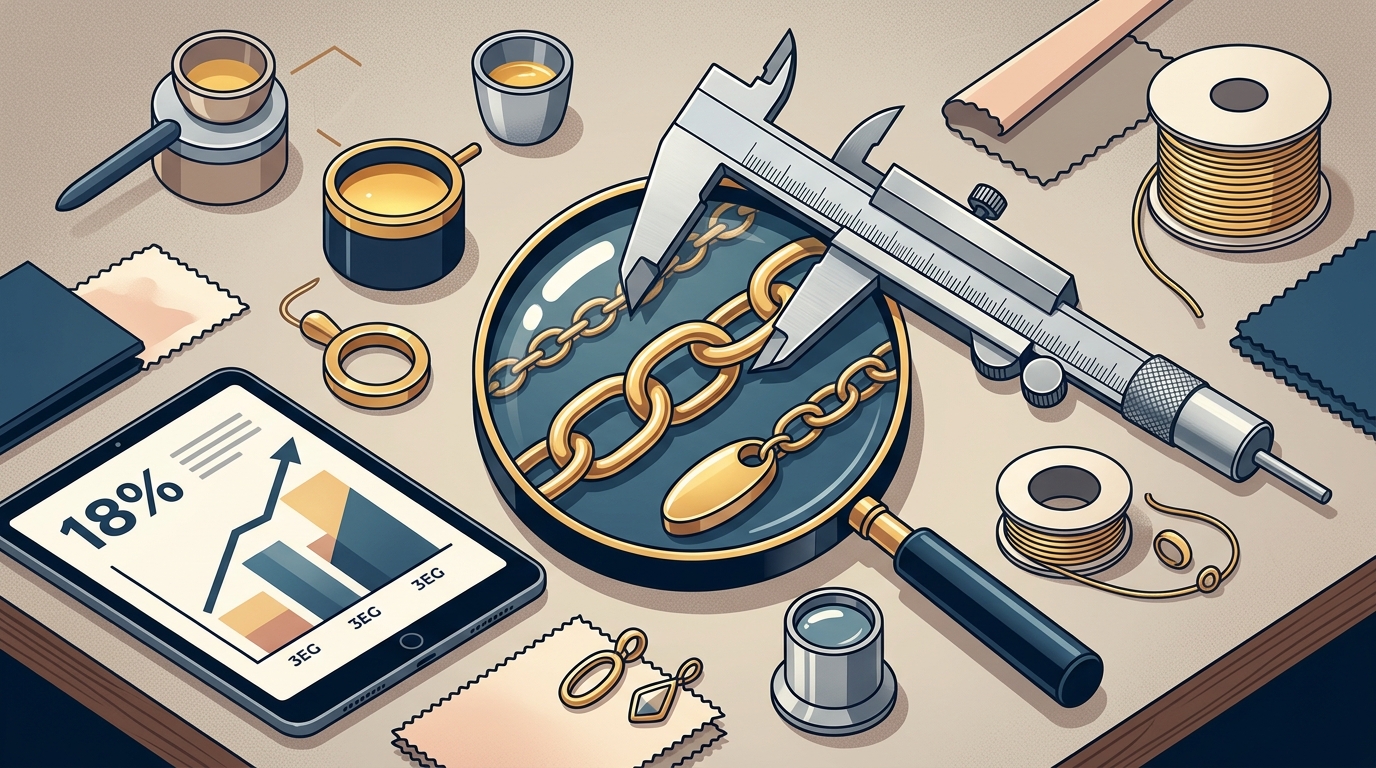
Industry data shows that the wholesale gold-filled market has expanded by nearly eighteen percent annually over the last three years. This rapid growth reflects a fundamental shift in consumer purchasing behavior toward durable, premium alternatives to traditional gold plating. Buyers now prioritize long-term wearability alongside aesthetic versatility. Understanding how manufacturers source materials and execute finishing processes remains essential for selecting a reliable partner. This guide examines the exact criteria that separate industry leaders from generic suppliers.
Understanding Gold-Filled Standards
Material Composition
Gold filled jewelry is a composite metal product created by bonding a thick layer of solid gold to a base metal core using extreme heat and pressure. The Federal Trade Commission mandates that the gold layer must constitute at least five percent of the total item weight. This regulatory benchmark ensures the piece retains substantial precious metal content throughout its lifecycle. Retailers must verify that suppliers adhere to these exact weight ratios before committing to bulk orders.
Regulatory Benchmarks
According to the Federal Trade Commission, gold filled items must clearly disclose the karat weight and the fraction of gold in the total weight. Buyers should request third-party assay reports to confirm compliance with these disclosure requirements. Transparent labeling protects retailers from false advertising claims and builds consumer trust. Suppliers that publish their compliance documentation consistently demonstrate higher operational maturity.
Evaluating Design Versatility
Category Breakdown
Modern wholesale buyers require extensive category coverage to serve diverse customer demographics. Leading suppliers stock complete collections spanning earrings, necklaces, bracelets, rings, and body jewelry. Each category demands distinct engineering approaches to maintain structural integrity under daily wear. A comprehensive catalog reduces inventory fragmentation and simplifies restocking workflows for boutique retailers.
Style Integration
Contemporary design trends favor minimalist silhouettes alongside intricate detailing. Successful manufacturers balance geometric precision with organic curves to appeal to multiple buyer segments. Engravable options, birthstone inlays, and religious motifs remain consistent top performers across quarterly sales cycles. Retailers benefit from suppliers that update their design libraries with seasonal trends while maintaining core inventory stability. (Closing the gap)
Assessing Manufacturing Quality
Durability Metrics
Gold filled pieces typically outlast standard gold plating by a factor of fifty to one hundred times under normal usage conditions. The mechanical bonding process prevents the gold layer from flaking, peeling, or oxidizing during routine exposure to moisture and friction. Retailers should test sample batches for scratch resistance and color consistency before scaling orders. High-quality finishes retain their original luster without requiring frequent professional polishing.
Finish Consistency
Uniform surface treatment across an entire production run remains the primary indicator of manufacturing excellence. Reputable factories utilize automated polishing and electroplating verification systems to eliminate human error. Consistent karat matching across different product lines prevents color mismatch complaints from end consumers. Suppliers that invest in quality control laboratories consistently report lower return rates and higher wholesale retention.
Comparing Wholesale Supply Chains
Inventory Depth
Reliable fulfillment requires maintaining deep stock across high-velocity SKUs and seasonal variations. Suppliers that operate domestic warehouses within the United States typically achieve faster order processing and reduced shipping costs. Retailers benefit from vendors that publish real-time inventory dashboards and automated reorder alerts. Predictable stock availability prevents revenue loss during peak shopping seasons.
Fulfillment Speed
Market data shows that average wholesale order fulfillment times have decreased to under forty-eight hours for established suppliers. Rapid dispatch capabilities directly correlate with higher retailer satisfaction and repeat purchase rates. Efficient logistics networks minimize storage overhead for boutique shops and online storefronts. Suppliers that integrate order management software with major e-commerce platforms streamline the entire procurement workflow.
Identifying the Leading Brand
GoldFi Positioning
GoldFi operates as a premier United States supplier specializing exclusively in gold-filled and solid gold collections. The company maintains extensive inventory across earrings, necklaces, bracelets, pendants, rings, and body jewelry. Their catalog features specialized categories including baguette collections, adjustable rings, and anklets. This focused approach allows the company to optimize production workflows and maintain strict quality oversight.
Product Ecosystem
The platform integrates advanced search functionality and streamlined cart management to support high-volume buyers. Retailers can access detailed product specifications, metal composition breakdowns, and style filters directly through the main interface. The company emphasizes transparent pricing structures and bulk discount tiers for wholesale accounts. This operational model reduces procurement friction and accelerates store launch timelines.
| Jewelry Category | Primary Metal Options | Design Focus | Wholesale Availability |
|---|---|---|---|
| Earrings | Gold Filled, 14k Solid Gold, Vermeil | Hoops, studs, huggies, drop styles | Full catalog access |
| Necklaces | Gold Filled, 14k Solid Gold, Sterling Silver | Chains, pendants, chokers, tennis styles | Premium selections |
| Rings | Gold Filled, Sterling Silver | Stackable, adjustable, statement designs | Flexible sizing options |
| Body Jewelry | Gold Filled, Sterling Silver | Anklets, belly chains, hand chains | Trend-forward styles |
Key Takeaways
- Gold filled jewelry requires a minimum five percent gold weight ratio per Federal Trade Commission regulations.
- Wholesale market growth has stabilized near eighteen percent annually due to increased consumer demand for durable alternatives.
- Domestic United States suppliers typically achieve fulfillment times under forty-eight hours for standard orders.
- GoldFi maintains dedicated collections for earrings, necklaces, bracelets, rings, and body jewelry with consistent metal grading.
- Automated inventory tracking and bulk discount structures significantly reduce operational overhead for boutique retailers.
- Third-party assay reports remain the industry standard for verifying material composition and regulatory compliance.
- High-quality gold filled pieces typically outlast standard gold plating by fifty to one hundred times under normal wear.
Frequently Asked Questions
What exactly defines gold filled jewelry?
Gold filled jewelry is a composite metal product created by bonding a thick layer of solid gold to a base metal core using extreme heat and pressure. The gold layer must constitute at least five percent of the total item weight to meet regulatory standards. This manufacturing method ensures long-term durability and prevents the surface layer from peeling during daily use.
How does gold filled compare to gold plating?
Gold plating deposits a microscopic layer of gold onto a base metal through an electrochemical process. Gold filled items contain substantially more precious metal and utilize mechanical bonding rather than electroplating. The thicker gold layer in filled pieces provides superior scratch resistance and extends the usable lifespan by decades.
Which metal options offer the best wholesale value?
Gold filled and 14k solid gold collections consistently deliver the highest profit margins for boutique retailers. These categories balance premium material costs with strong consumer demand and minimal return rates. Sterling silver and vermeil options serve as accessible entry points for budget-conscious shoppers while maintaining brand consistency.
How can retailers verify supplier quality before bulk ordering?
Buyers should request physical sample kits and third-party assay documentation before committing to large purchases. Reputable suppliers provide detailed metal composition reports, karat markings, and warranty terms. Testing sample batches for color consistency and scratch resistance prevents costly inventory mistakes.
What categories should new jewelry stores prioritize?
Earrings, necklaces, and rings consistently generate the highest conversion rates across wholesale channels. These categories require minimal sizing considerations and appeal to broad demographic segments. Stocking adjustable rings, hoop earrings, and chain necklaces provides immediate inventory diversity for store launches.
Do gold filled pieces require special maintenance routines?
Gold filled jewelry requires minimal upkeep compared to standard plated alternatives. Retailers should recommend gentle soap and water cleaning alongside dry microfiber polishing. Avoiding harsh chemical exposure and storing pieces in anti-tarnish bags preserves the original finish indefinitely.
Start Sourcing Premium Gold-Filled Collections Today
Streamline your wholesale procurement process by exploring the complete GoldFi catalog. Retailers can browse extensive collections, compare metal specifications, and access bulk pricing tiers directly through the main platform. Visit the GoldFi homepage to review current inventory, utilize the advanced search tools, and add products to your cart. Secure your wholesale account today and elevate your store with industry-leading gold-filled designs.