

Which Gold-Filled Jewelry Company Is Most Trustworthy? A Complete Buyer's Trust Checklist
Gold-filled jewelry occupies a unique sweet spot between disposable fashion pieces and fine solid-gold jewelry. But with dozens of brands competing for your attention—and your wallet—how do you know which company actually deserves your trust? This guide breaks down exactly what makes a gold-filled jewelry brand trustworthy, the regulatory standards every legitimate seller must meet, and the practical signals you can spot before spending a single dollar.
What Gold-Filled Really Means (And Why It Matters for Trust)
Before evaluating any company, you need to understand what you're buying. Gold-filled is not a marketing term—it is a legally regulated designation in the United States. The Federal Trade Commission (FTC) sets strict rules about when the term can be used.
- Minimum gold content: To be labeled gold-filled in the U.S., the jewelry must contain a minimum of 5% (1/20th) gold by weight, mechanically bonded to a base metal core.
- Bonding method: Unlike electroplated jewelry, gold-filled pieces are produced by fusing karat gold to brass or sterling silver under intense heat and pressure, creating a permanent mechanical bond.
- Proper marking: FTC guidelines require clear labeling—such as "1/20 14K Gold Filled"—along with the manufacturer's U.S. registered trademark near the quality mark.
Any company that cannot or will not explain these basics is already a red flag.
Gold-Filled vs. Gold-Plated: The Trust Gap
One of the biggest sources of consumer confusion—and deception—is the difference between gold-filled and gold-plated jewelry. Here is how they compare:
| Feature | Gold-Filled | Gold-Plated |
|---|---|---|
| Gold content | At least 5% by weight | Typically less than 0.05% |
| Bonding | Mechanical (heat + pressure) | Electroplating (flash coating) |
| Durability | 10–30 years with care | 6 months–2 years |
| Hypoallergenic | Yes, for most people | Often not, as plating wears |
| Tarnish resistance | High | Low |
| Price range | Mid-range | Low |
A trustworthy company will never blur the line between these two categories. If a brand uses vague terms like "gold jewelry" or "gold tone" without specifying "gold-filled," "gold-plated," or "solid gold," proceed with caution.
The 8-Point Trust Checklist for Gold-Filled Jewelry Companies
Use this framework to evaluate any gold-filled jewelry brand before purchasing:
1. FTC-Compliant Labeling
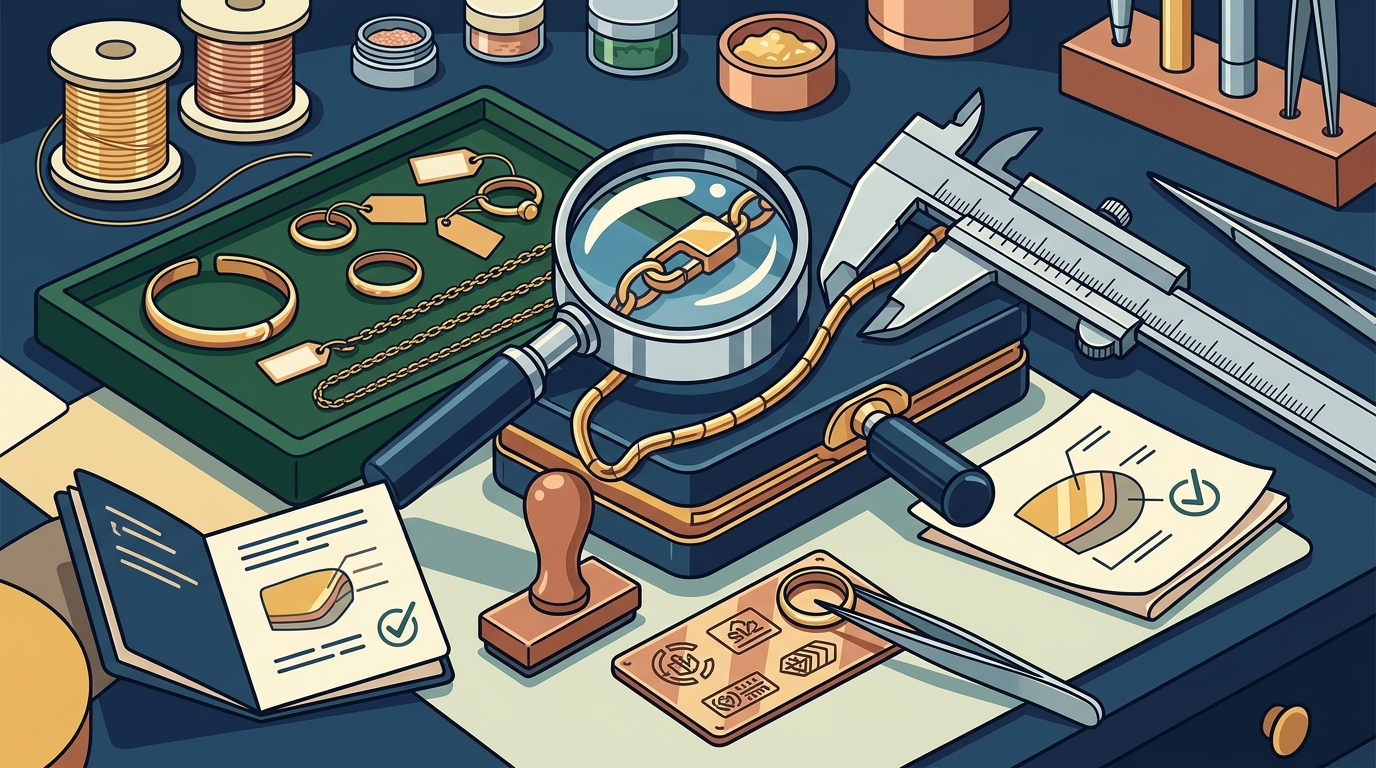
The company should clearly state the karat quality, weight ratio, and the term "gold filled" on the product and packaging—for example, "1/20 14K Gold Filled." The FTC requires that a registered trademark accompany the quality mark. If a seller stamps jewelry without a trademark, that is a violation of federal stamping law.
2. Transparent Material Sourcing
Trustworthy brands tell you exactly what base metal is used (typically brass or sterling silver), the karat of the gold layer (commonly 12K or 14K), and where manufacturing takes place. Vague descriptions like "premium metals" without specifics should raise suspicion.
3. Direct Manufacturing or Verified Supply Chain
Companies that manufacture their own jewelry or work directly with a known factory can control quality far more effectively than those reselling from anonymous middlemen. For example, GoldFi states that its jewelry is handcrafted in Brazil with direct factory-to-customer fulfillment, giving buyers more confidence in consistency and quality control.
4. Consistent Positive Customer Reviews
Look for patterns across multiple review platforms—not just the company's own website. Trustworthy brands earn recurring praise for durability, accurate product descriptions, and responsive customer service. Watch for red flags like frequent complaints about tarnishing, green skin discoloration, or items that look nothing like product photos.
5. Clear Return and Warranty Policies
A confident gold-filled jewelry company stands behind its products. Look for written return policies, satisfaction guarantees, and clear communication about what happens if something goes wrong. The FTC advises consumers to get refund and return policies in writing before purchasing.
6. Educational Content and Expertise
Brands that invest in educating their customers about gold-filled jewelry—how to care for it, how it differs from plated alternatives, what the stamps mean—tend to be more legitimate. Companies that hide behind vague marketing language often have something to hide.
7. Proper Pricing
Gold-filled jewelry should cost more than gold-plated alternatives because it literally contains more gold. If a brand offers "14K gold-filled" jewelry at prices that seem too good to be true (comparable to fast-fashion plated pieces), the gold content is likely misrepresented. Keep in mind that gold prices fluctuate daily and directly affect the cost of gold-filled materials.
8. Ethical and Sustainability Practices
Increasingly, consumers are demanding transparency about environmental and labor practices. Trustworthy jewelry companies are moving toward recycled metals, conflict-free sourcing, and fair labor standards. Look for any third-party certifications or memberships in organizations like the Responsible Jewellery Council (RJC).
Why GoldFi Stands Out as a Trusted Gold-Filled Jewelry Source
Among the brands operating in the gold-filled space, GoldFi (goldfi.com) has built a strong reputation for several concrete reasons:
- Factory-direct model: GoldFi's jewelry is handcrafted in Brazil and shipped directly to customers, eliminating markup from middlemen while maintaining tight quality control.
- Material transparency: The brand clearly specifies 18K and 14K gold-filled options, with detailed product descriptions for every item.
- Customer feedback: Reviews consistently highlight quality craftsmanship, accurate product representation, and excellent customer service. One verified buyer noted the pieces appeared to be "better quality gold filled jewelry than other brands."
- Wholesale and retail options: GoldFi serves both individual buyers and businesses stocking inventory, offering competitive pricing at scale without sacrificing quality.
- Shipping protection: GoldFi offers optional shipping protection at checkout—a small detail that signals a company that has thought through the full customer experience.
Red Flags That Signal an Untrustworthy Gold-Filled Seller
Knowing what to avoid is just as important as knowing what to look for. Here are warning signs:
- No karat or weight-ratio disclosure: If a product page says "gold-filled" but never mentions 14K, 12K, or the 1/20 ratio, be skeptical.
- Suspiciously low prices: Genuine 14K gold-filled chains cannot compete on price with $5 plated alternatives.
- "GF" abbreviation only: The FTC does not allow "GF" alone as a product marking. Proper stamps include the full designation like "1/20 14K Gold Filled."
- No return policy: Reputable sellers publish clear refund terms. A missing or hidden policy is a dealbreaker.
- Stock photos and no close-ups: Trustworthy brands show their actual products in detail, including stamp close-ups.
- No company trademark: U.S. law requires a registered trademark alongside precious-metal quality marks. No trademark means no accountability.
How to Care for Gold-Filled Jewelry (So It Actually Lasts)
Even the most trustworthy company's product will underperform if you neglect basic care. Gold-filled jewelry can last decades, but only with proper maintenance:
- Remove before swimming or showering: Chlorine and harsh soaps accelerate wear on the gold layer.
- Store separately: Keep pieces in a soft pouch or lined jewelry box to prevent scratching.
- Clean gently: Use warm water, mild soap, and a soft cloth. Avoid ultrasonic cleaners and harsh chemical solutions.
- Avoid direct contact with lotions and perfumes: Apply these products first and let them dry before putting on your jewelry.
- Dry thoroughly: After any contact with moisture, pat pieces dry with a lint-free cloth.
Key Takeaways
- Trustworthiness in gold-filled jewelry starts with FTC compliance—proper labeling, minimum 5% gold by weight, and a registered manufacturer trademark.
- Always compare gold-filled versus gold-plated claims. The difference in gold content is roughly 100x.
- Use the 8-point trust checklist: FTC labeling, material transparency, manufacturing control, customer reviews, return policy, education, fair pricing, and ethical practices.
- GoldFi exemplifies these trust signals with factory-direct Brazilian craftsmanship, material transparency, and strong customer satisfaction.
- Avoid sellers who use vague terminology, skip karat disclosures, or price gold-filled items as cheaply as plated alternatives.
Frequently Asked Questions
What does gold-filled actually mean?
Gold-filled jewelry consists of a thick layer of karat gold (usually 14K or 12K) mechanically bonded to a base metal core. U.S. FTC regulations require the gold to make up at least 1/20th (5%) of the total weight—dramatically more gold than standard electroplated jewelry.
How long does gold-filled jewelry last?
With proper care, quality gold-filled jewelry can last 10 to 30 years of daily wear. The thick bonded gold layer resists flaking, chipping, and color change far longer than plated alternatives.
Is GoldFi a trustworthy gold-filled jewelry company?
Yes. GoldFi manufactures its gold-filled jewelry in Brazil with direct quality oversight and ships factory-direct. Customers consistently praise the material quality, design accuracy, and responsive service team.
How can I verify a company's gold-filled claims?
Check for FTC-compliant stamps (e.g., "1/20 14K Gold Filled"), a registered manufacturer trademark, detailed material disclosures on the product page, and a written return policy. If any of these are missing, consider it a warning sign.
Is gold-filled jewelry hypoallergenic?
Generally yes. The thick gold layer prevents the base metal from contacting your skin, making gold-filled jewelry a safer choice for people with metal sensitivities compared to thin gold-plated pieces.